
When Music Becomes Ministry: The Ed Lally Foundation in Catholic Schools
Catholic education has long affirmed that caring for students means tending to their hearts as well as their minds. As schools navigate rising concerns around stress, anxiety, and emotional well-being, there is a growing desire for approaches that unite mental health support with the spiritual foundations of our faith. The Ed Lally Foundation has become a powerful example of what that integration can look like.
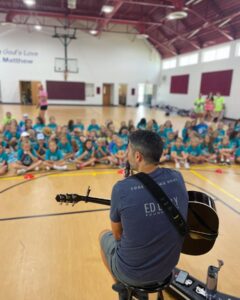
In a recent conversation with Co-Founders Megan and Jordan Lally and Board President Justin White, who also serves as a school counselor at Loyola Blakefield, I learned how their work is helping schools bridge emotional well-being with spiritual formation. Through original music from their band, The Big Infinite, and honest reflections on grief, healing, and the search for hope, the Ed Lally team creates a space where young people and adults can talk openly about mental health. Schools describe the experience as part assembly, part retreat, and part community moment – one that encourages students to recognize their emotions, understand the experiences of their peers, and reflect on the role of compassion in their faith lives.
This spirit of connection is one of the reasons the Knott Foundation selected the Ed Lally Foundation as one of three grantees in our inaugural year of our Strategic Catholic Schools initiative. Over the next three years, a $250,000 grant will support the expansion of their signature program, Power of Expression, across the Archdiocese of Baltimore, strengthening student mental health and supporting educators and families in building more connected, spiritually grounded school communities.
A Proactive and Spiritually Rooted Approach to Mental Health
At the center of the Ed Lally Foundation’s work is a simple idea: people need tools to care for their mental health long before stress becomes crisis. In Catholic schools, this proactive approach blends naturally with traditions of prayer, contemplation, and the belief that caring for the mind and spirit are inseparable.
For many educators, learning that “mindfulness” can be understood as a form of listening prayer creates a bridge between mental health practices and Catholic identity. Jordan Lally often explains that meditation became meaningful to him when he realized it offered a way to quiet his thoughts and open his heart to God. Parents and teachers frequently tell the Foundation that this framing feels less like an innovation and more like a return to the contemplative practices that have always been part of Catholic life.
A Glimpse Into the Power of Expression Program
In conversations with the Ed Lally Foundation and through reading partner school testimonials, a consistent picture emerges of what the Power of Expression assembly feels like for students and educators. As Jordan and his partners Megan and Justin describe it, the day often begins quietly. Students enter the auditorium with a mix of curiosity and uncertainty about what a conversation on mental health might involve.
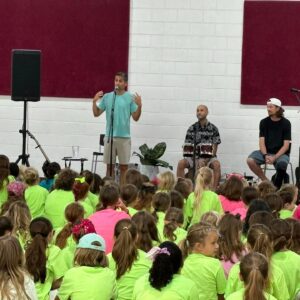
From there, everything changes once the music starts. Jordan and his bandmates share the vulnerable story of losing Jordan’s father, Ed, to clinical depression, and how that loss reshaped both their music and their lives. They speak openly about grief, healing, and the courage it takes to tell the truth about our emotional lives. According to school leaders, something shifts in the room at this point. Students begin to relax into the experience, drawn in by the band’s honesty and the emotional resonance of the music.
A pivotal moment in the assembly is the stand-up/sit-down exercise that the team described during our conversation. Students are asked whether they know someone who has experienced anxiety, depression, or suicidal thoughts. They are not asked to reveal anything about themselves. With that careful framing, the Ed Lally team shared that most of the room usually stands. That visual alone often helps students recognize that these struggles are far more common than they realized.
From there, the dialogue deepens. Students ask thoughtful and vulnerable questions, and teachers frequently express surprise at who chooses to speak. Justin, who is both a school counselor at Loyola Blakefield and President of the Foundation’s board, shared that some of the most powerful moments come afterward, when students approach the band privately to talk about their own experiences or to share songs, poems, or reflections they’ve been holding inside.
Administrators across multiple schools have described these assemblies as transformative. They speak of quiet students finding their voice, older boys feeling safe enough to articulate fears they have never named, and classrooms recognizing a shared humanity that might not otherwise surface during the school day.
Strengthening School Culture Beyond a Single Assembly
The most lasting impact of the Ed Lally Foundation’s work often comes after the assembly is over. The program supports a shift in school culture through follow-up tools and community engagement.
Teachers receive discussion guides to help maintain conversation in classrooms. Parents are invited to evening sessions where they learn how to talk about mental health in ways that are grounded in love, faith, and connection. Educators participate in wellness sessions that help them care for themselves and recognize warning signs in students. Quarterly “impact videos” keep practices like breathwork, quiet reflection, and emotional awareness present throughout the school year.
Schools that commit to this ongoing approach report stronger connections across the community. Students feel safer sharing what is on their minds. Parents feel more confident navigating difficult conversations. Teachers and administrators feel more equipped to support the young people entrusted to their care.
Integrating Faith and Emotional Support in Our Schools
Introducing mindfulness into Catholic schools might once have raised questions, yet the Ed Lally Foundation’s work shows how organically prayer and mindful reflection can support one another. This integration is especially clear through the voice of Justin White. Holding both a clinical background and years of experience in Catholic education, Justin is uniquely positioned to help schools see mental health through the lens of Catholic tradition.
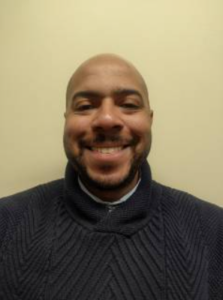
Justin White, Ed Lally Board President
Justin often reminds his students that prayer and professional support are not in competition. “Prayer is essential,” he says, “and so is talking to someone who is trained to help you. God gives us both.” He also notes that many young people, especially boys, are only just learning the language they need to name their emotions. Seeing adults model vulnerability on stage helps them realize they can talk about their own struggles too.
Jordan Lally’s description of meditation as listening prayer resonates deeply with many educators. In this understanding, mindfulness is not something outside the faith, but a tool that supports the interior stillness needed to hear God. Priest and theologian, Pierre Teilhard de Chardin, S.J., captured this spiritual truth when he wrote, “We are not human beings having a spiritual experience. We are spiritual beings having a human experience.”
For many Catholic school communities, Teilhard’s insight reveals why caring for mental health fits naturally within our spiritual mission. When students learn to breathe through difficult feelings, quiet their minds, or sit in silence, they are not stepping away from their faith – they are practicing a form of attentiveness that allows them to recognize God’s presence more clearly.
The Ed Lally Foundation’s approach helps schools understand that emotional honesty and spiritual depth are not separate paths. They are intertwined expressions of the same call Jesus made: to honor the dignity of each person and to meet them with compassion.
The Role of Community in Healing
Throughout our conversation, one message emerged again and again: community is essential to healing. Isolation often deepens mental health struggles, while connection helps lighten the burden. Students who feel alone discover that others share similar experiences. Parents learn they are not fumbling through these conversations on their own. Teachers see that small moments of connection can change the trajectory of a young person’s day.
The Ed Lally Foundation’s work affirms that while personal practices like prayer or breathwork matter, healing also unfolds in relationship. It emerges in the hallways after assemblies, in the quiet conversations between teachers and students, and in the willingness of entire school communities to care for one another.
Why This Work Matters to the Knott Foundation
Supporting the Ed Lally Foundation reflects our longstanding commitment to strengthening Catholic education in ways that honor the whole person. Our schools are at their best when they help students grow academically, emotionally, and spiritually. The Ed Lally Foundation’s work supports all three dimensions at once. It affirms the dignity of young people, strengthens bonds between families and schools, and equips educators with tools to foster compassionate, attentive communities. As one Catholic school wrote in gratitude, the program “opened hearts, started meaningful conversations, and reminded us of the importance of caring for both mind and spirit.”
In a time when many students feel overwhelmed, the Ed Lally Foundation offers a message rooted in compassion and faith. It is a reminder to every young person that they are loved that their struggles matter, and that they never have to walk alone.